Showing posts with label BNP Paribas. Show all posts

Sunday, 8 March 2015

Credit - Information cascade

"Every market is in transition." - Kenneth Lay, former CEO of Enron
Watching with interest the impressive melt up in European equities during the month of February (with French index CAC40 up close 14% since the beginning of the year), in conjunction with continuous credit and rates compression, marking the return of leverage structured credit as the hunt of yield runs unabated, we reminded ourselves of the "information cascade" model when choosing our title analogy:
"An information (or informational) cascade occurs when a person observes the actions of others and then—despite possible contradictions in his/her own private information signals—engages in the same acts. A cascade develops, then, when people “abandon their own information in favor of inferences based on earlier people’s actions”." - source Wikipedia
In the specific case of the current equity melt-up helped recently in Europe supported as well by "better" economic data, no doubt that some investors have abandoned their own information in favor of inferences based on earlier central bankers actions when it comes to implementing QE, with Europe on the verge of launching a program of its own.

When it comes to assessing the on-going lift-off in European equities, it follows the lift-off we have seen in the US as well as in Japan, following the various rounds of QEs. 

In the "Information cascade model", there are four key conditions:
"1. Agents make decisions sequentially
2. Agents make decisions rationally based on the information they have
3. Agents do not have access to the private information of others
4. A limited action space exists (e.g. an adopt/reject decision).
One assumption of Information Cascades which has been challenged is the concept that agents always make rational decisions. More social perspectives of cascades, which suggest that agents may act irrationally (e.g., against what they think is optimal) when social pressures are great, exist as complements to the concept of Information Cascades." - source Wikipedia
Of course we agree with point number 2. When it comes to financial markets, agents often seems to act "irrationally", and display what former Fed Chairman Alan Greenspan called "Irrational exuberance" but then again, as we posited in our conversation "Pascal's Wager" investors are indeed making a "rational" decision based on the premises that central bankers are "deities":
"In the investment world, we think investors are betting with their "life savings" that central bankers are either gods or not."
Obviously investors that believed that the SNB's had a "godly' status met their makers when the SNB finally pulled the plug on the Euro peg but we ramble again...

When it comes to markets and the choice of our specific title, no doubt that the current "euphoric" environment is a clear display of "Information cascades being at work:
"Information cascades have become one of the topics of behavioral economics, as they are often seen in financial markets where they can feed speculation and create cumulative and excessive price moves, either for the whole market (market bubble...) or a specific asset, like a stock that becomes overly popular among investors." - source Wikipedia
What we also find of interest is that marketers also use the idea of cascades to attempt to get a buying cascade started for a new product:
"If they can induce an initial set of people to adopt the new product, then those who make purchasing decisions later on may also adopt the product even if it is no better than, or perhaps even worse than, competing products. This is most effective if these later consumers are able to observe the adoption decisions, but not how satisfied the early customers actually were with the choice. This is consistent with the idea that cascades arise naturally when people can see what others do but not what they know." - source Wikipedia
In similar fashion, central bankers around the world have done the same "marketing" exercise. They have induced other central bankers to adopt QE, although it is fairly clear that the real economic benefits of QE are dubious at best.

Therefore this week will review the current "risk-on" information cascade environment given, we think it is entirely flow driven with one of the main culprit being Japan's GPIF and we will also muse around the utility of a European QE in the current context.

Synopsis
  • Under a dovish monetary global policy, both stock and bond markets will strengthen concurrently
  • In the equity space, it's "party on" with a caveat
  • We have moved from a low volatility regime to a higher volatility regime
  • QE + Austerity = road to growth disillusion/social tensions but road for heaven for financial assets
  • QE + fiscal boost/Investment push/reform mix = better odds of self-sustaining economic model / preservation of social cohesion. Less short-term fuel for financial assets, but a safer road longer-term
  • Final note: Why European banks deleveraging has much further to go and why it means more pain for shareholders and bondholders

  • Under a dovish monetary global policy, both stock and bond markets will strengthen concurrently. 

The current European "melt-up" in European equities is driven by investors' flows and in particular by Japan's GPIF allocations. As reported by Nomura in their 2nd of March note entitled "GPIF Q3 FY14 investment results", there has been significant progress in portfolio rebalancing from the GPIF:
"The Government Pension Investment Fund (GPIF) released its investment results for Q3FY14 and reported that investment income totalled JPY6,623.3bn for a total return of
5.16%.
Beginning this quarter, the GPIF adopted a new method for announcing the amount of its investment assets – it no longer discloses investment assets by asset.
By making certain assumptions, we estimate the GPIF reduced its domestic bond holdings by JPY6.4trn, added JPY1.9trn in domestic stocks and shed JPY0.8trn short term investment. It increased its investments in international bonds and international stocks by JPY0.7trn and JPY1.9trn, respectively.
Compared with the JPY3.3trn reduction in Q2, the GPIF accelerated its domestic bond selling significantly in Q3 (JPY6.4trn reduction including matured investments). This is consistent with October-December JSDA data showing that trust banks were net sellers of yen bonds by a total of JPY3.1trn (vs. JPY0.5trn net buying in July-September).
By comparing the asset mix at end-December and the new Basic Portfolio, we have estimated how much GPIF assets need to increase or decrease to achieve the target median weightings. According to our calculations, GPIF should shed JPY13.3trn in domestic bonds, and increase domestic stocks by JPY5.7trn, international bonds by JPY1.7trn and international stocks by JPY5.9trn.
Assuming the GPIF reduces domestic bonds at a similar pace to Q3, it could achieve the target weighting in six months. Similarly, it would achieve the target weighting in 12 months if the reduction continues at a pace on par with Q2, and eight months if it proceeds at the Q2-Q3 average pace (Case [1] in Figure 2). The amount of portfolio shift necessary would be smaller if we reflect mark-to-market changes since end-December (i.e., higher stock prices, etc.; Case [2] in Figure 2). We will monitor how market movements affect the GPIF’s portfolio shift.
Looking at supply and demand factors alone, the GPIF’s portfolio shift should cause stock prices and yen bond rates to rise and JPY to weaken further. In our view, however, JGB investors may highlight the fact that the GPIF has made significant progress in its yen bond selling, and gradually shift their focus to when it is completed, as well as subsequent supply and demand dynamics.
We also note that public pensions other than the GPIF appear to have lagged in their portfolio shifts, and may begin to accelerate yen bond selling. In this case, the portfolio shift by public pension funds as a whole would be a longer process. However, we believe the market will begin to wonder if the BOJ can continue QQE2 purchases as it heads toward end-FY15, when the GPIF is likely to complete its rebalancing." - source Nomura
And as we posited in our post "The Vortex Ring", the re-allocation process from Japanese behemoth GPIF, has continued to put additional downward pressure on core government bonds:
"It is important to note as well that for the Japanese investors, adjusted for living expenses, US treasuries still yield more this year than Japanese government debt than at any time since 1998". - source Macronomics, 26th of May 2014
Go with the flow:
One should closely watch Japan's GPIF (Government Pension Investment Fund) and its $1.26 trillion firepower. Key investor types such as insurance companies, pension funds and toshin companies have been significant net buyers of foreign assets.


When it comes to Toshin funds, as reported as well by Nomura in their 4th of March note entitled "Toshin momentum remains strong", retail investors are also piling in international markets:
"Retail investors accelerated their investment in foreign assets via toshins last week, according to NRI (Figure 1). They bought JPY136bn ($1.1bn) of foreign securities, the highest pace in three weeks. This was the 14th week in a row of net purchases, and retail investors' cumulative foreign security buying via toshins this year has reached JPY1.2trn ($10bn), about JPY856bn ($7.2bn) bigger than for the same period in 2014
(Figure 2). 

Toshin momentum remains relatively strong, as risk sentiment among retail investors has improved gradually.
Retail investors continue to prefer foreign equities to other asset classes. They are estimated to have purchased JPY56bn ($0.5bn) of foreign equities via toshins, while purchasing JPY27bn ($0.2bn) of foreign bonds and JPY52bn ($0.4bn) of foreign hybrid securities. They continued to sell domestic assets via toshins for the third week in a row, while the pace of selling slowed to JPY60bn ($0.5bn) from JPY98bn the previous week. Japanese equity prices have been performing well since mid-January, and this likely encourages retail investors to book profits. Retail investors’ expectations for USDJPY appreciation have also led to stronger investment in foreign equities than in domestic assets via toshins (see "Retail investors still see USD/JPY upside", 12 February 2015). Lower yields globally may reduce the appeal of foreign bonds to retail investors. We expect toshin momentum to remain strong, because of better risk sentiment and expectations for JPY weakness, while their preference for foreign equities relative to bonds will remain strong for the time being." - source Nomura
Arguably, the GPIF has not been the only game in town with the pending European QE which, in terms of flows has driven them into overdrive when it comes to European markets as indicated by Bank of America Merrill Lynch Flow Show note from the 5th of March entitled "Carry On Risk":
"Risk-On: cash down for 3rd straight week to fund $7bn into equity funds and $6bn into bond funds Europe the Consensus Darling: euphoric 99th percentile inflows over past 8 weeks ($31bn)…heaviest since Dec'08 (Chart 1)
Retail loves Income: chunky $2.8bn inflows to equity income funds this week; note BofAML private clients have significantly raised allocation to equity income ETF’s past 24 months (Chart 2)

Carry On Risk: incessant central bank rate cuts + rising macro optimism = risk taking on the rise...our Bull and Bear Index (flashed contrarian “buy” in Jan) up to 4.3 (Chart 3); 
big payroll/strong avg hourly earnings would cause risk to pause but Feb small biz hiring intentions today was not strong." - source Bank of America Merrill Lynch
The sentiment of bullishness in February has run unabated but, once again the "strong" NFP data in the US came back to spoil somewhat the party in the US equity space has "good" news once again meant "bad" news and increasing the possibility of a rate hike by the Fed in the near future (we still very much doubt about this).

  • In the equity space, it's "party on" with a caveat, 

Not only have foreign flows and the ECB QE path pushed equities into overdrive, but the renewed appetite for buybacks in conjunction with a rise in M&aA operations have also been supportive of the aforementioned rally. But there is indeed a caveat, because while the party is going strong, earnings have reverted in the US and remain flat in Europe. On that note we agree with Louis Capital Markets Cross Asset Strategy note from the 2nd of March, that fundamentals do not seem to matter in this market cycle when it comes to equities behavior to say the least:
"The reading of financial markets has been an understandable process when regarding the bond, the currency and the commodity markets. The equity market however has been a real enigma and its recent behaviour has not helped to better our comprehension of it. What is the driver of equity indices??? We thought that the expected stream of companies’ earnings was the main driver however this market cycle has demonstrated that this assumption is a false one. Subsequently, we are having significant difficulty in identifying the main drivers of the market.
Equity indices are reaching new highs in this cycle contrary to earnings that have reverted in the US and that remain flat in Europe. The P/E expansion has been very strong as a consequence and its limit is unknown. The current level of investor confidence is amazingly high and it contrasts strongly with the business climate in the real sphere that has not shown similar signs of overheating.
This kind of context is obviously very positive for equity investors. Some will say “it’s crazy, it’s going to crash”. However, history has repeatedly proven that high-levels of hubris often take a while before inevitably ending in tears. We did not expect to live through another mania in our life after the one experienced at the end of the 90’s, but we were wrong. This cycle is even more impressive that the one at the end of the 90’s, because it has come from nowhere and has so far lasted longer.
These days many commentators are explaining that, contrary to the TMT bubble, as profits are rising on this occasion current circumstances cannot be diagnosed as a “bubble”. We do not believe the current context constitutes a bubble. However, we were more comfortable in paying Cisco 100x expected earnings in 2000 than paying today 18x the earnings for Endesa or 20x for Belgacom. In the 2000’s the story was a strong one. A sort of revolution was taking place and it was consistent from a market perspective to dream of a new world emerging. Today, we are failing to find a similar story for Endesa and Belgacom, and our dreams are not stimulated when listening to the IR’s presentation of Belgacom.
The “low interest rates environment” are the words that can be found in every mouth during this cycle. The argument appears so obvious that everybody embraces the idea that the influence of central banks on the bond market also impacts the equity market through the discount factor mechanism. If profits of Belgacom remain flat for the next 20 years, paying the stock 20x current earnings roughly implies the recovery of its investment in 20 years. This is a long period of time, but the 20-year government bond yield of Belgium is close to 1%, thus implying a 100 year time horizon needed to recover its investment. 20 years vs. 100 years would represent the “equity risk premium”.
We fully disagree with this rationale, because it implies a “by default” investment. The pricing of equities is not driven by the pricing of bonds. Their underlying drivers are too different to think there are spill-over effects that inflate “naturally” equities. The Japanese experience has been crystal clear on this subject: long term bond yields have oscillated between 1% and 2% between 1998 and 2008, and despite this low remuneration of the bond asset class, the performance of the Nikkei was null during this period of time.We do not want harp-on regarding this subject as it one of weak importance for many PMs. The long only PMs are fighting against a benchmark regardless of the global mood of the equity market, whilst macro traders focus on relative value trades. The main beneficiaries of this equity mania are diversified PMs, because they have the choice between two asset classes that have been in a bullish mood for 6 years now. So even if they are wrong in their assets’ selection, they have not lost money in absolute terms." - source Louis Capital Markets
For us, and as per our title, the "Information cascade is at play and feeding speculation and create cumulative and excessive price moves on a grand scale for the whole market (market bubble...).
  • We have moved from a low volatility regime to a higher volatility regime
As per our title analogy, the more central banks meddle with asset prices, the more disconnected and unstable markets are becoming.
On the subject of a higher volatility regime which was discussed in our previous conversation by our friends at Rcube Global Asset Management , European equities have started 2015 on very strong note as highlighted above by the amount of flows in the asset class, but implied volatility have risen across financial markets as depicted by Louis Capital Markets in their monthly report entitled "Europe In Sight":
"The European equity market has been very strong since the beginning of the year, outpacing most equity indices. It is difficult to find a tangible and credible reason behind this move because nothing has really changed in the real economy. It seems it is first of all “sentiment driven” and that the perspective of an aggressive central bank has helped to lift this sentiment.We are surprised by this reaction because the “central bank” argument remains by nature fragile and because we had previously signs of cautiousness with the rising implied volatility across financial markets (see chart below).


In the previous cycle, the 2002-2007 cycle, the rising volatility coincided with the end of the bull market. Although we do not call for the end of this bull market, we thought that the rising volatility since last summer would have prevented an “upward crash” like we got in January/February (15%+ for the Eurostoxx50 in less than 2 months). The chart below shows to what extent this move is unusual.


The sector hierarchy shows that this move corresponds to a pure re-rating as all sectors, with a small dispersion, benefited from this euphoria. The consumer segment has led a little thanks to the decline of oil prices but this is not the whole story. The median 12m Fwd PER of the Stoxx Europe 600 universe stands now at 16.8 and it is well above the top of 2007. That’s the most important story because it questions the valuation regime of European equities. Is this level exaggerated or will we see a median PER at 20 before the end of the year (implying an additional upside potential of 20%+)??? This context is perturbing for investors because it blurs the notion of “cheap” and “expensive” stocks, and lowers in the end, the relevance of the valuation factor." - source Louis Capital Markets
As far as the Information cascade is concerned and the on-going "melt-up" we would repeat what we indicated back in January 2012 in our conversation "Bayesian thoughts" when we quoted Dr. Constantin Gurdgiev, from his post entitled "Great Moderation or Great Delusion":
"when investors "infer the persistence of low volatility from empirical evidence" (in other words when knowledge is imperfect and there is a probabilistic scenario under which the moderation can be permanent, then "Bayesian learning can deliver a strong rise in asset prices by up to 80%. Moreover, the end of the low volatility period leads to a strong and sudden crash in prices."

Bayesian learning today is indeed leading towards an acceleration in the rise in asset prices, while the end of the low volatility regime in conjunction with the rise in the US dollar (meaning a global tightening from a pure "macro" perspective) indicate we are indeed in the final innings of the game we think.

  • QE + Austerity = road to growth disillusion/social tensions but road for heaven for financial assets
In our November 12 2014 conversation "Chekhov's gun" we put forward our take on QE in Europe:
"Current European equation: QE + austerity = road to growth disillusion/social tensions, but ironically, still short-term road to heaven for financial assets (goldilocks period for credit)…before the inevitable longer-term violent social wake-up calls (populist parties access to power, rise of protectionism, the 30’s model…).
“Hopeful” equation: QE + fiscal boost/Investment push/reform mix = better odds of self-sustaining economic model / preservation of social cohesion. Less short-term fuel for financial assets, but a safer road longer-term?"  - source Macronomics 12th of November 2014
We also indicated at the time:
"Of course our "Hopeful" equation has a very low probability of success given the "whatever it takes" moment from our "Generous Gambler" aka Mario Draghi which has in some instance "postponed" for some, the urgent need for reforms, as indicated by the complete lack of structural reforms in France thanks to the budgetary benefits coming from lower interest charges in the French budget, once again based on phony growth outlook (+1% for 2015)"
Given France has now postponed any chance of meaningful structural reforms until 2017 with the complicity of the Europe Commission, (again a complete sign of lack of credibility while imposing harsh austerity measures on others), and that the government will face an electoral onslaught in the upcoming local elections which will see yet another significant progress of the French National Front, we are convinced the"Current European equation" will breed more instability and not the safer road longer term.

This brings us to a subject we have already tackled when it comes to differentiating QE in Europe versus QE in the US. It is all about Stocks versus Flows:
"We mentioned the problem of stocks and flows and the difference between the ECB and the Fed in our conversation "The European issue of circularity", given that while the Fed has been financing "stocks" (mortgages), while the ECB is financing "flows" (deficits). We do not know when European deficits will end, until a clear reduction of the deficits is seen, therefore the ECB liabilities will have to depreciate."

"Credit growth is a stock variable and domestic demand is a flow variable" as indicated by Michael Biggs and Thomas Mayer in voxeu.org entitled - How central banks contributed to the financial crisis.

On that essential difference we came across a very interesting note from BNP Paribas from the 6th of March entitled "The ECB wants to buy but who wants to sell?"where they highlight 3 main differences between QE in Europe versus QE in the US which we summarized below:
  1. Size matters: the corporate credit market/ABS market in Europe is not as deep as in the US. It is very difficult for institutional investors in Europe to switch from holding government bonds to corporate credit/ABS.
  2. Timing: QE 1,2,3 in the US were done when the amount of US Treasuries issued was rising due to the US budget deficit! In Europe, QE is being launched when there is a very weak net issuance level due to austerity measures being implemented.
  3. Liquidity constraints for Banks and Insurers are much more harsher than in 2010/20111, meaning that these institutions will hang onto their holdings, negative yields or not.
Stocks versus Flows, is for us a key element in terms of the macro understanding of the ECB's position versus the Fed as highlighted in BNP Paribas's note:
"The stock of bonds versus the flow
Over the past few weeks, much has been written about the risk that the ECB may not be able to find all the bonds it is intending to buy. This seems a strange predicament, since not so long ago many people were worried about the eurozone having too much debt. Before we go into more detail, it is worth remembering that someone’s debt is somebody else’s asset, so saying that there is too much debt would be equivalent to saying that there are too many assets, which we never hear (and for good reason). The main focus should rather be more on the quality of the debt (and how it would be repaid) instead of the size.
Why is there such a worry about the execution of QE? As we have pointed out several times, the size of the buying is relative to the size of bonds for sale. We show in Table 1, that the net issuance for 2015 is negative by EUR 200bn after taking into account the bonds bought under QE. This is the major difference with the US and the UK, as QE in those countries were done at a time of greater budget deficit, therefore limiting the concern about supply.

Other differences and specific points about European QE
When the FED was buying T-Notes, sellers had the opportunity to re-invest in the US fixed
income markets. They could also re-invest the proceeds into corporate bonds or in the mortgage markets, where the liquidity was enough to absorb part of the money that used to be in US government bonds. Investors could also choose lower quality bonds, investing some proceeds into municipal bonds for example. Obviously, it is unlikely that holders of AAA-rated US government bonds bought a lot of lower quality US paper (but some spillover must have taken place as we can see in Chart 1 and chart 2), and at the very least they were not penalised by negative deposit rates if the cash was not re-deployed immediately. So if they were not able to extend the duration or go lower into credit quality, they always had the choice to park (at least momentarily) some of the cash into very short-dated bonds at zero.
This is not the case in Europe today. When holders of a government bond from a eurozone country sell a bond, they do not have much of an alternative in the fixed income markets for reinvestment. The European corporate bond market is not liquid enough, the ABS market is too small and the ECB also has a programme to buy covered bonds. So unlike in the US, once a bond is sold to the ECB, the buyer is likely to look for another … government bond. So in the context where the offer of bonds is less (because deficits are lower) and there is a large marginal buyer, there is upward pressure on prices.
There are other differences. QE in the US and UK was done when the rules for liquidity constraints were easier. As regulation pushes banks to hold large amounts of collateral in order to comply with stricter liquidity rules, there is a natural extra bid for short-dated bonds. These bonds are also supported by the fact that the overnight rate is negative (unlike in the US) and as large investment funds do not have access to the deposit facility of the ECB, they have no choice but to buy short-dated bonds. This is why there are so many bonds with negative yields (up to 25% of the outstanding bond market size) – another significant difference with the US.
A word of caution
We should keep in mind that the ECB is officially trying hard to create inflation in line with its mandate. In that context the very long-dated bonds remain particularly vulnerable if CPI inflation numbers start to pick up. Nobody is expecting a bounce anytime soon, but when the base effect of oil fades (towards the end of 2015) and the weaker euro eventually lets some imported inflation in the eurozone, the picture could be very different. Also when QE started in the US, the economic situation was deteriorating following the 2008 crisis, which is not the case in Europe, where some early signs are that the situation is at the very least stabilising or getting slightly better. Forward inflation expectations in the eurozone have already corrected higher at 1.77% (5-year, 5 years forward implied inflation expectations) and are not far off from the ECB’s target, hinting that QE will be successful over the medium term, (Chart 6). 
Such high inflation anticipations combined with the suppression of nominal yields means that investors going into the long end are forced to accept very negative real returns (Chart 7). 
This is a highly unusual situation, which cannot be sustained over the medium term, hinting that at some stage the long end of bond prices will drop." - source BNP Paribas
Caveat creditor...as we posited in our September 2014 conversation "Sympathy for the Devil":
"The greatest trick European central bankers ever pulled was to convince the world that default risk didn't exist" - Macronomics.
"Investors have indeed Sympathy for the Devil we think, as they continue to pile up with much abandon and more and more getting "carried away" in their insatiable hunt for yield. In that sense Baudelaire's 1869 poem rings eerily familiar with the current investment situation in the sense that investors have been giving our "Generous Gambler" the benefit of the doubt (OMT - and now full blown QE) and shown their sympathy and their blind beliefs in "implicit" guarantees, rather than "explicit" (such as the German Constitution as we argued in various conversations)" - source Macronomics, September 2014
As we indicated in our conversation "Eastern promises" on the 9th of June 2012 we continue to think Germany could be the prime suspect in triggering a breakup (Greece being the perfect scapegoat):
"We think the breakup of the European Union could be triggered by Germany, in similar fashion to the demise of the 15 State-Ruble zone in 1994 which was triggered by Russia, its most powerful member which could lead to a smaller European zone. It has been our thoughts which we previously expressed."

Keep in mind that Angela Merkel while only appearing to be making material sacrifices has managed to keep Germany's liabilities unchanged so far.

  • QE + fiscal boost/Investment push/reform mix = better odds of self-sustaining economic model / preservation of social cohesion. Less short-term fuel for financial assets, but a safer road longer-term"
We will never understand why the European QE is not made alongside some form of New Deal with massive infrastructures in Europe, which would put people back to work and improve the odds of a self-sustaining economic model with better preservation of social cohesion.
On a side note, if you are fans of the US TV series "House of Cards", you will have noted that in season 3, Frank Underwood (Kevin Spacey) now president of the United States is fighting against an hostile US Congress. In terms of his proposed economic policies, President Underwood wants a hostile Congress to cut Social Security and appropriate $500 billion on public spending to boost jobs in infrastructure, government and the private sector.

In the "real world", as reported by Bloomberg  on the 4th of March, "U.S. Companies Are Stashing $2.1 Trillion Overseas to Avoid Taxes":
"Obama earlier this year proposed applying a 14 percent mandatory tax on the stockpiled profits and a 19 percent minimum tax on foreign earnings going forward.
The one-time tax would generate $268 billion over six years, which Obama wants to use for infrastructure." - source Bloomberg
We find this interesting particularly around the discussions about "Biotechs" current valuations, which for us are clearly representative of their "tax advantage" compared to the "Utilities" sector for example. We touched on this subject in our October conversation "A Descent into the Maelström":
"We think that the "too much liquidity" popular trades of biotech, internet, gaming and small cap are up for more pain in the future. Technology and Health Care Companies in the S&P 500 index are both heavy users of adjusted earnings measures in their financial statements: Of 69 technology companies in the index, 56 use non-GAAP earnings, of 56 Health Care companies, 45 use them. (source "Earnings, but Without the Bad Stuff", Gretchen Morgenson, November 9 2013 - New-York Times). The vast majority of public biotech companies in the U.S. (87%) do not pay taxes because they lose money as they pursue breakthrough therapies and cures as well as using non-GAAP metrics to boast are more "positive" accounting picture. Young high tech companies often end up paying less than 10% of income in taxes whereas old railroads and utilities often pay more than 25% and cannot easily "jump" countries using M&A for tax inversion purposes"
Should the US administration decide to "close the tax gap", rest assured that your "Biotech Bubble" would burst in an instant, but, that's another subject...

  • Final note: Why European banks deleveraging has much further to go and why it means more pain for shareholders and bondholders
While the Hypo Alpe Aldria drama is unfolding in Austria with additional losses of €5.1bn to €8.7bn meaning more pain to come for bondholders  (€9.8bn senior and sub, €1.2bn Pfandbriefe), we leave you with Louis Capital Market chart displaying the relative performance of the the STOXX Banks sector (SX7P) versus SXXP:
- source Louis Capital Market
As a reminder, US banks have increased their capital basis by 57% since 2007 until 2012 while Western European banks by only 37% on the same period as per our conversation "Sympathy for the Devil". So keep on playing the "Dead Cat Bounce" game in European banks stocks the on-going "Information Cascade", rest assured that when it comes to European banks, the trend is indeed your friend...

Sic transit gloria mundi -  "Thus passes the glory of the world." 
Stay tuned!

Saturday, 16 March 2013

Credit - Dumb buffers

"When the weather changes, nobody believes the laws of physics have changed. Similarly, I don't believe that when the stock market goes into terrible gyrations its rules have changed."
- Benoit Mandelbrot 

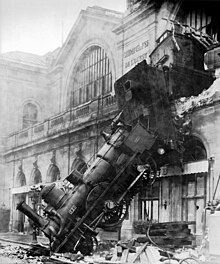
A buffer is a part of the buffers-and-chain coupling system used on the railway systems of many countries, among them most of those in Europe, for attaching railway vehicles to one another. Buffers in the very earliest days of railways were rigid (dumb buffers). 
Cross section of volute spring buffer

You might wonder where we might be going with this week's railway analogy, but, looking at the recent senate hearings following last year JP Morgan's 6 billion dollar losses, discussions surrounding banks and equity capital have resurfaced as of late. Arguably one of the most pertinent read we have come across was from Bloomberg's editors - JPMorgan’s $6 Billion Loss Shouldn’t Be a National Matter:
"To make the whole system more resilient, banks need to get a larger share of their funding in the form of equity from shareholders, as opposed to loans from depositors and other creditors. We have advocated $1 in equity for each $5 in assets, a level that would absorb a 20 percent drop in the value of a bank’s investments, compared with JPMorgan’s 3.1 percent. The latest global banking rules require only $1 in equity for each $33 in assets, and use a lenient approach for measuring the ratio.
Higher equity requirements reduce taxpayer support to banks in a different way, by making them less likely to require bailouts. The added discipline would also put natural pressure on banks to shrink: Once shareholders fully realized how poorly the largest banks perform in the absence of subsidies, they would have more incentive to demand that they be broken up into smaller, more profitable units." - source Bloomberg

Dumb buffers were the source of many staff accidents and damaged loads and vehicles. The Board of Trade required all new construction in England and Wales from 1889 to have spring buffers, but in Scotland the railway companies continued to accept new wagons with dumb buffers until 1 October 1903. From 31 December 1913 all dumb buffered vehicles were banned from the main line, but the Scottish owners gained an extension to 1915. In fact, the disruption of the Great War meant that dumb buffers persisted in Scotland until at least 1920-21. 

One can argue that the latest global banking rules requiring only $1 in equity for each $33 in assets is akin to the famous dumb buffers that plagued Scottish railways for an extended period of time, which might be leading to many "derailments" for banks in particular and for the economy in general as witnessed with the financial crisis of 2008:

Similar to Bloomberg editors and Simon Johnson, MIT professor and former chief economist at the IMF, we have long advocated larger equity buffers for banks in order to reduce the systemic risk banks pose to the real economy as a whole. Back in October 2011, in relation to discussions surrounding Capital Regulation, contrary to many beliefs, we argued as well that Bank Equity is not expensive. It is a myth. A study realized by Stanford University by Anat R. Admati is a must read. a summary of the presentation made to the Bank of England by the co-author is available here:
"Fallacies, Irrelevant Facts, and Myths in the Discussion of Capital Regulation: Why Bank Equity is Not Expensive"

A summary of a presentation to the Bank of England is available below which highlights Professor's Admati's key findings.
http://www.bankofengland.co.uk/publications/events/ccbs_workshop2011/presentation_admati.pdf

Some countries such as Denmark have started asking for higher extra capital. For instance, Denmark's systematically important financial institutions will have to hold 2.5% to 5% of extra capital as recommended by Denmark's Sifi committee. Its recommendations will have to be passed into law by the Danish parliament.

While the European Union us trying to press ahead with global banks standards by March 22nd, if the measures are not in place by month end, it would mean additional delays in implementing the January 2014 target for Basel III accord, which could potentially shorten the transition period and put some additional strain on lenders to adjust by the start of 2014 or delay the implementation until January 2015.

In this week conversation, we would like to focus our attention to this very important subject of bank regulation and capital adequacy, given both the European Union and the US have struggled to agree on legislation to apply the international standards on capital, known as Basel III, which were published in 2010 in conjunction with the Dodd-Frank act, following the demise of Lehman Brothers Holdings Inc.

So far, the Basel rules negotiations also have been stalled on how much additional capital should be required for systemically important financial institutions as reported by Rebecca Christie and Caroline Connan in their Bloomberg article from the 26th of February entitled - Barnier Says EU Needs Basel Deal to Lift Uncertainty for Banks:
"Lawmakers are pushing the EU to include in the capital rules a requirement for country-by-country reports on profits, losses and taxes, according to the document. Nations have been reluctant to expand the scope of the capital rules, preferring to tackle the topic in separate accounting legislation.
The Basel Committee on Banking Supervision brings together banking regulators from 27 nations including to the U.S., U.K., and China to coordinate their prudential rule-making.
The Basel III measures, which must be written into national laws, would more than triple the core capital lenders must hold and set standards for how lenders should manage risks. Representatives of Karas and the Irish presidency in Brussels declined to comment on the paper." - source Bloomberg.

On top of that, regulators from the Basel Group have clearly put Bank's debt addiction on scrutiny this year as reported by Ben Moshinsky and Jim Brunsden in Bloomberg on the 12 th of March - Bank's Debt Addiction Said to Face Scrutiny at Basel Meetings:
"Regulators are preparing to fight lenders over the details of the so-called leverage ratio as they seek to toughen rules on the minimum amount of capital they must use to back their investments. The Basel group, which brings together supervisors from 27 nations, will meet in the Swiss city tomorrow, according to the people, who asked not to be identified because the meetings are confidential.
 Concerns over how banks calculate reserves has led U.K. bank regulator Adair Turner and U.S. Federal Deposit Insurance Corp. board member Jeremiah Norton to call for tougher leverage ratios. Global supervisors in 2010 included a draft leverage ratio in an overhaul of rules, known as Basel III, drawn up in response to the financial crisis that followed the collapse of Lehman Brothers Holdings Inc.
“Early on, banks did not see it as such a big danger, or as a priority for lobbying, because it looked less likely to be implemented in the EU than other parts of Basel III,” Philippe Lamberts, the lawmaker leading the work on the Basel III rules for the European Parliament’s Green group, said in a telephone interview.
Leverage ratios force banks to hold capital equivalent to a percentage of the value of their assets. Such measures are simpler than standard capital requirements as they don’t give banks any scope to take into account the riskiness of their investments when calculating the reserves they must hold." - source Bloomberg

Back in September 2011, we quoted Dr Jochen Felsenheimer from asset management company "assénagon" now called "XAIA", we would like to quote him again looking at the current context:
"Banks employ too much debt, because they know that they will ultimately be bailed out. Governments do exactly the same thing

Banks have fought bitterly against increasing equity buffers which is the cheapest and easiest way to recapitalize banks. Why? Because allowing high payouts to shareholders, namely bank employees in many cases, allows financial institutions to raise their leverage: "Focus on ROE is also a reason bankers find hybrid securities, such as debt that converts to equity under some conditions, more attractive than equity." - Anat R. Admati.

For instance, since 2009, banks have indeed been very creative in the methodology used to beef up their Core Tier 1 ratio using a new generation of Hybrids securities called CoCo (Contingent Convertible Capital). CoCos, convert to equity or are written off once an issuer’s capital ratios fall below a preset level. This market for these new securities, already amounts to +10 billion dollars. This contingent convertible security pays a higher coupon and automatically convert into equities or suffer a full or partial write-down when the bank's capital ratio falls below a pre-defined trigger. 

The beauty for the issuer is that the CoCo automatically boosts its Core Tier 1 capital ratio in times of stress rather than being forced into a dilutive right issue during difficult market conditions. Owning a CoCo, according to a recent BNP Paribas note is very similar to selling a Down-and-In put option on the issuing
bank’s shares with a knock-in barrier linked to a balance sheet capital ratio as opposed to stock price level.
The issuing bank is effectively buying skew and convexity (crash protection) from the investor, who is exposing himself to losses in stress scenarios. 

It is not a free lunch although a coupon in the region of 7% to 8% is outright appealing in this low rate / low yield environment.

The benefits of such transactions for the issuer of CoCo notes is that not only it enables the issuer to maintain a particular minimum capital level, it also pleases the regulator and allows issuers which have been previously bailed out in Europe, to continue repayment of the aid received. For instance, KBC bank issued in January 1 billion dollar worth of CoCos, allowing them to continue the repayment schedule on time and, following a stress test, the National Bank of Belgium had required an additional 2 billion euros of Core Tier 1 capital to be raised. KBC completed in December 2012 a 1.25 billion euro equity offering and 750 million euros worth of CoCos.
While Europe is falling behind in relation to the implementation of Basel III, Switzerland has started implementing it as of January 2013 as indicated in a recent note by BNP Paribas on KBC's specific CoCo from January 2013:
"It is worth pointing out that due to the implementation of Basel 3 in Switzerland starting January 2013 as planned (as opposed to the delay in Basel 3 implementation in Europe, due to delay in completion of CRD4), the relevant ratio in ascertaining the likelihood of trigger is now the Core Equity Tier 1, rather than Core Tier 1 as it was under Basel 2.5. While this comes as no surprise and should have been fully expected it does make quite a bit of difference. For instance, at its Q3 12 UBS reported Basel 2.5 Core Tier 1 ratio of 18.1%, whereas the pro-forma phased in Basel 3 CET1 ratio was 13.6%." - source BNP Paribas

The fixation bankers have with equity buffers mean that they prefer issuing hybrids securities such as CoCos rather than equity in order to maintain their leverage and generate ROE. As indicated by Dr Jochen Felsenheimer, in case of trouble, the insurer is the taxpayer. CoCos are deemed to be "capital" and automatically improve the capital ratios, pleasing regulators in the process, and avoiding an automatic dilution of existing shareholders via capital increases through right issues. They are not equivalent to "equity", they are debt instruments, paying no doubt, a higher coupon, given the risk taken by the low subordination and risk of capital wipe-out faced by the bondholders.

As a reminder, under the draft Basel III plan in 2010, banks would have to hold so-called Tier 1 capital equivalent to 3 percent of their assets, so capping a lender’s debt at no more than 33 times those reserves, which, we think is way too low.

Last week events surrounding German Bank Commerzbank's capital increase is a reminder of not only the lack of sufficient equity buffer in the banking space but is also indicative of the material impact internal models of RWA (Risks Weighted Assets) can have to boost capital ratios as highlighted again in Bloomberg's article from the 12th of March Bank's Debt Addiction Said to Face Scrutiny at Basel Meetings:
"The temptation for banks to boost their reserves through changes to risk calculations, rather than real steps to raise capital, could be countered by a strong leverage ratio, said Lamberts, the European lawmaker. One example of this is how German lender Commerzbank AG sought to meet EU capital rules in part by adjusting its risk calculations, rather than simply raising fresh reserves, Lamberts said.
“Details that are coming to light about how banks misuse their internal models, for example when Commerzbank said it would make up half of a capital shortfall through changes to its models, show the need for this kind of rule,” he said.
Commerzbank was one of more than 60 lenders told by the European Banking Authority to hold capital equivalent to 9 percent of its risk-weighted assets." - source Bloomberg

On March 2013, Commerzbank AG, Germany's second largest bank announced it would sell 2.5 billion euros of shares to repay the government and insurer Allianz SE. Commerzbank received a 18.2 billion euros bailout in 2009 and the German government had owned 25% of the bank prior to the announcement.

Of course the 15% dilution announcement led to the share sliding 14% in Frankfurt on the 13th of March - source Bloomberg:
 The share declined 14% valuing the bank at around 7 billion euros.

Commerzbank's shares, the intraday proverbial "sucker punch" - source Bloomberg:
This news made us chuckle given that the CEO Martin Blessing, will be using the capital raised to repay 1.6 billion euros owned to the government and 750 million euros to German insurer Allianz, as well as increasing its Core Tier 1 capital to 8.6% under full Basel III capital from 7.6%. 


Why did we chuckle, you might ask? Well, because Commerzbank's largest shareholder SoFFin (Special Financial Market Stabilization Fund), converted already its silent participation in June 2012 to approximately 58.85 million Commerzbank shares,  increasing in effect the capital of Commerzbank to maintain its equity interest ratio in Commerzbank to 25% plus one share. With the 15% dilution, this participation will be now diluted to 20%, meaning in effect a loss for the German taxpayers.
Oh well...

But this painful adjustment for Commerzbank will not be the last one, given we have already established the link between credit and shipping and in particular the exposure of German's second largest bank to shipping woes back in August 2012:
"Commerzbank – the world’s second-biggest provider of ship finance, and reluctant owner of a flotilla of foreclosed ships – said it is shutting down its €20bn (£15.7bn) ship funding operations entirely to “minimise risk and capital lock-up” under tougher EU banking rules."

In April in 2011, in our conversation "Shipping is a leading credit indicator", we indicated:
"Commerzbank’s 2008 takeover of Dresdner Bank AG increased its stake in shipping lender Deutsche Schiffsbank to 92 percent, doubling the size of its maritime-loan portfolio, just before the industry entered its biggest crisis since World War II." - source Bloomberg.

One can wonder what will be the recovery value for its maritime-loan portfolio looking at the boom and bust which occurred in the shipping space - source Bloomberg:
"The marine shipping industry is highly cyclical and susceptible to periods of boom and bust. Cycles are driven by overbuilding during times of growth to take advantage of strong markets. Shipping companies do not have enough lead time to alter orders when economic activity begins to slow, which has a significant effect on freight rates." - source Bloomberg.

Not only have overbuilding occurred due to cheap credit that fuelled an epic bubble in the Baltic Dry Index, but, the on-going decline on vessel prices, will no doubt exert additional pressure on recovery values for Commerzbank's loan book:
"Prices of seaborne vessels have crashed since peaking in 4Q08 and have been steadily declining since 4Q09, as excess capacity slowed the new build backlog, along with cheaper builds in China and tight credit markets. Chinese shipbuilders have been using price in attempt to win market share. Price pressure has come on less sophisticated dry-bulk ships relative to LNG tankers." - source Bloomberg


On the subject of banks capital shortfalls and the need to deleverage, and RWAs in particular, Nomura's note from the 11th of March 2013 entitled EU banks - Reconciling weak macro with momentum made some interesting points:

"To illustrate the point on headline capital ratios, the last published EBA Basel 3 monitoring exercise showed that at end-2011, European banks required EUR 225bn of equity capital to meet the minimum CET1 requirement of 7.0% of RWAs (inclusive of GSIB buffers where required). The report implied that the risk-weighted capital ratio rather than the unweighted leverage ratio was more of a bind on banks’ capital needs (given that the bar for unweighted leverage at 3.0% is set rather low, in our view). While we do not expect an official update on the 2012 capital position before September 2013, the EBA did separately disclose that as a result of capital raised for the 2012 stress test as well as other capital measures, European banks increased their capital positions by more than EUR 200bn in 1H 2012 (mostly through measures that directly increase capital rather than reduced assets). Based on the 2011 run-rate of net profit, in 2H 2012 around another EUR 40bn could have been added to banks’ capital bases.
Given that some banks will choose to build additional capital buffers, we do not expect the next monitoring exercise to show zero capital shortfall at end-2012 (several of the large often wholesale banks such as Deutsche Bank still had a gap at end-2012). However, we expect the reported capital shortfall to be substantially reduced for end-2012.
We are aware in 2013 that regulators are looking to improve harmonisation of the measurement of RWAs, moving away from internal models. In some cases, the banks have been well prepared (such as in Sweden) while in others it will delay the timeline to full Basel 3 compliance (such as in the UK). In general, we find that it is the wholesale banks with the lowest RWA/total asset ratios that might have the most need for additional capital actions or balance sheet shrinkage to meet regulatory goals. 
However, our main concerns for the banks are less about the measurement of RWAs and more about the fact that in some economies (such as Spain), the historical cost carrying value of banks’ assets is too high compared with their market value considering the fall in real estate prices in those economies. These unrecognised bad assets (along with deteriorating GDP and rising unemployment) require banks to divert profits to loan loss reserves rather than new lending." - source Nomura.


Moving back to our discussion around bank regulation and capital adequacy, we need to ask ourselves what have been accomplished since the demise of Lehman in 2008? Not enough, as indicated by the Bloomberg editors on the 10th of March in their article - Getting the Banks Around the World to Play by the Same Rules:
"Since that 2008 pact, progress has been made on the road to convergence. One example: Starting on March 11, Wall Street’s largest banks, including Goldman Sachs Group Inc. and JPMorgan Chase & Co., must process derivatives trades through clearinghouses, an accomplishment of the 2010 Dodd-Frank financial reform law, itself part of the U.S.’s commitment to convergence. By holding collateral and standing between buyers and sellers, clearinghouses can prevent one participant’s default from infecting all the others. In another step forward, the EU decided in December to create a single bank regulator. 

In Reverse 
But the dream of convergence remains, well, a dream. Conflicting national and regional laws, regulations and accounting standards have blocked the world from getting on the same page on financial reform. This, in turn, has jeopardized the ability of regulators to work across borders to address the next crisis. Shutting down a large failing bank that, say, loses all its capital because of a trading strategy gone haywire isn’t possible without universal rules for resolving sick banks. Moreover, financial companies will be able to take advantage of regulatory arbitrage -- shifting operations to countries with the loosest rules.

What happened? Let’s take a tour.
 In the U.S., regulators have been lobbied to a standstill. They have yet to name a single nonbank financial company or industry as systemically risky, despite the immense size and vital roles played by money-market funds, hedge funds, insurers and nonbank lenders. 
The Commodity Futures Trading Commission is backing away from some of its early positions on derivatives, moves that could have broken the big-bank stranglehold over the swaps business. The agency looks likely to revoke a proposal that would have required large investors to solicit quotes from at least five dealers, as a way to promote pre-trade price transparency. 
Regulatory agencies have also stalled over the Volcker rule, named after former Federal Reserve Chairman Paul A. Volcker. The measure is supposed to limit speculative trading by federally insured banks. For more than a year, five agencies have been debating with large banks and among themselves about where to draw the line between trading and making markets for clients, which the law exempts from the Volcker rule. On Capitol Hill, meanwhile, lawmakers from both parties and both chambers want to repeal parts of Dodd-Frank, including the requirement that banks move derivatives trading to separate affiliates with their own capital. 

Nasty Split
In Europe, the situation is no more auspicious. A nasty split has opened between the Continent and the U.K. The European Parliament and national governments have moved in recent weeks to tax financial transactions and cap bankers’ bonuses. This has (rightly) rubbed the British the wrong way, as their model of finance -- the Anglo-Saxon model -- is less regulated, more centered on trading and pays bigger bonuses than its counterparts in, say, France or Germany. 
Another rift is between Europe and the U.S. -- this one over capital requirements. New rules being written in Basel, Switzerland, have been watered down after much bickering. The level is now set at 7 percent of risk-weighted assets, up from 2 percent. Still, it falls short of the 10 percent initially sought by the U.S., and way short of the 20 percent of total assets that some economists and academics recommend. France and Germany led the opposition, seeking to protect the interests of their biggest lenders, which would have needed to raise more capital than foreign competitors, Bloomberg News has reported. Not only is the global financial system no safer now than it was in 2008, it’s also clear that the project of convergence is badly stalled. Is the world really prepared to let the great convergence turn into the great divergence?" - source Bloomberg.

On a final note the principal reason for banks to hold a larger equity buffer is to be able to face risks such  as real estate bubbles. For instance both Credit Suisse and UBS have been asked to hold more capital to that effect as reported by Bloomberg:
"The 1.2 swiss-franc-to-euro cap and low interest rates have prevented the Swiss National Bank from tightening monetary policy to avert soaring real estate prices. To mitigate the risk of a property bubble, the authorities plan to curb lending growth by requiring banks to hold an extra 1% of capital on residential mortgages, starting 4Q13. UBS and Credit Suisse had 252 billion francs of mortgages outstanding at end-November." - source Bloomberg.


"What we define as a bubble is any kind of debt-fueled asset inflation where the cash flow generated by the asset itself - a rental property, office building, condo - does not cover the debt incurred to buy the asset. So you depend on a greater fool, if you will, to come in and buy at a higher price." - James Chanos 

Stay tuned!

Sunday, 17 February 2013

Credit - Bold Banking

"Dives sum, si non reddo eis quibus debeo. I am a rich man as long as I don't pay my creditors." 
 - Titus Maccius Plautus (c. 254-184 BCE),

While watching the volatility in currency markets and the decent moves in both EUR/USD and USD/JPY currency pairs, prior to the much anticipated G-20 Moscow meeting to avoid a broader currency war from developing in the world, we thought our title should simply be this week "Bold Banking".

Listening to the many conversations relating to a potential early exit from QE in 2013 and the conflicting analysis around the dire potential for losses the rise of government bonds could have on Credit in particular (Investment Grade), and assets classes in general,  we would have to agree with Exane BNP Paribas recent strategy note from the 14th of February 2013 entitled "When doves cry", namely that 1994, which was a nasty year for risky assets is indeed a case study of the risk scenario:
"A surprise rate hike in February 1994 sent 10-year Treasury yields some 200bps higher in just 3- months. This sparked a period of significant de-leveraging. Fixed income investors fared worst, but equity markets suffered too. The S&P500 fell around 9% in 2-months. But when the US sneezes….European markets were hit harder." - source Exane BNP Paribas

We do agree with their views, namely that while early 2013 are most likely to be still supportive for risky stories, the second part of the year might be a different story altogether:
"Make your money in H1 
The macro backdrop should remain supportive of equity markets through the early months of the year. The global growth / inflation backdrop looks favourable – and equity valuations are likely to rise as a result. We think the oft-cited event risks – be it European elections or US sequestration - are unlikely to result in sustained market weakness. 
H2 could be tougher 
The risk to equity markets rests in the evolution of the macro cycle. The debate around US monetary policy is likely to intensify later in the year. The first move to withdraw monetary stimulus usually prompts a correction in equity markets. This time that move is likely to take the form of an ending of QE rather than a policy rate hike - but we expect similar price action to result." - source Exane BNP Paribas

But, as one looks at the bold central bankers actions taken so far in the US and Europe, with Japan, joining the party as of late, taking its Japanese currency and its Nikkei index to higher levels in the process, as the old pilot saying goes:
"There are old pilots and there are bold pilots; there are no old, bold pilots!" 

Japanese stocks rising in conjunction with Yen weakening versus the Euro - source Bloomberg:
"Stocks in Japan may rally more than those in Europe as Prime Minister Shinzo Abe’s push to halt deflation weakens the yen, according to Morgan Stanley. As the CHART OF THE DAY shows, the benchmark Nikkei 225 Stock Average’s performance relative to the Stoxx Europe 600 Index has tracked moves in the Japanese currency against the euro. Japan’s equities, which have surged 9.4 percent this year, will climb further as investors account for the impact Abe’s policies, Morgan Stanley said. “Japan’s recent strong equity-market performance has substantially further to run as the market further discounts the positive impact of Abenomics,” Morgan Stanley strategists led by Jonathan Garner wrote in a report last week. “Meanwhile, European equities have recently experienced a bigger re-rating than those in other regions versus recent average levels.” The Stoxx 600 has advanced 23 percent from its June 4 low as European Central Bank President Mario Draghi pledged to preserve the euro and U.S. lawmakers agreed on a compromise budget. That has driven the gauge’s valuation to 12.3 times estimated earnings, compared with the five-year average of 11.5 times, according to data compiled by Bloomberg. The yen has dropped 20 percent in the past six months, the worst performer of 10 developed-nation currencies tracked by Bloomberg Correlation-Weighted Indexes, as the Bank of Japan announced a 2 percent inflation target and a shift to open-ended asset purchases. In the same period, the euro surged 8 percent for the biggest gains." - source Bloomberg 


While 1994, was the year of a big sell-off in many risky assets courtesy of a surprise rate hike, 1994 was as well the year of the demise of "Czar 52" on the 24th of June 1994 which saw the tragic crash of a Boeing B-52H "Stratofortress" assigned to 325th Bomb Squadron at Fairchild Air Force Base during practice maneuvers for an upcoming airshow. The demise of the BUFF (the nickname among pilots for the B-52 meaning Big Ugly Fat Fellow) was due to Colonel Bud Holland's decision to push the aircraft to its absolute limits. He had an established reputation for being a "hot stick".

So what is the link, you might rightly ask, between "bold banking" and "bold piloting"?

A subsequent Air Force investigation found that Colonel Bud Holland had a history of unsafe piloting behavior and that Air Force leaders had repeatedly failed to correct Holland's behavior when it was brought to their attention (not  French president Hollande in that instance but we digress...).

When it comes to "reckless banking" and "reckless piloting", we found it amusing that current leaders have repeatedly failed to correct central bankers' policies, like the ones pursued by former Fed president Alan Greenspan and current Fed president Ben Bernanke, or, the ones pursued by Japan. These policies are instigating, bubbles after bubbles at an inspiring rate. When one looks at the fragile state of the "House of cards" and the "boldness" of credit investors dipping their toes, once again in very risky credit structures such as CLOs made up more and more with Cov-lite loans, we think our title, and our analogy to the crash of "Czar 52" is this time around very appropriate, but once again our thoughts keep wandering.

In this week's conversation, we would like to look at the binary risks posed by not only rising rates and the pain that can be inflicted in the investment grade space, in conjunction with the rising tide of corporate impairments and write-downs (goodwill being one of our long standing pet subject) and its implications but, looking as well into the rising risks in the credit space with the returns of all the riskiest structures of the recent 2007-2008 credit crisis. First a quick credit overview.

The divergence between the performance in US equities (S and P500) and the Eurostoxx 50 has been clearly growing in early February, the red line in the graph being Italian 10 year yields - source Bloomberg:
This growing divergence can not only be explained by the difference in credit growth we have discussed on numerous occasions, you need to factor in the Corporate Credit Cycle.

As displayed by BNP Paribas in their February Credit Markets conference called entitled "Giving Equities too much Credit",  as far as the Corporate Credit Cycle is concerned, the US is ahead of the games:
- source BNP Paribas

This distinction clearly explains the outperformance of European High Yield Credit in 2012 versus US High Yield.  In the deleveraging process, US Households have indeed been able to deleverage more as indicated in the below graph from the same BNP Paribas note:

But, for the "Great Rotation" theory put forward by many pundits such as Bank of America Merrill Lynch, to play out, much more deleveraging is needed.

As far as Europe is concerned and the Eurostoxx 50, we think European stock analysts should be seen as having an established reputation for being "hot sticks" in similar fashion to Colonel Bud Holland, given they are still expecting double digit EPS growth in the European space as per BNP Paribas' note:

And we know that "Great Expectations" can lead to huge disappointments, when ones looks at Economic consensus continuing to be revised down in Europe:

So "mind the gap", because, one the indicator we have been following, has been the 120 days correlation between the German Bund and its American equivalent, namely the US 10 year Treasury notes. This correlation is rising. In "Risk Off" periods we have noticed that the 120 days correlation had been close to 1 in 2010, 2011 and 2012, whereas in "Risk On" periods, the correlation was falling to significantly lower level. Currently the correlation is rising towards 78%, albeit at small pace, but it warrants caution we think  - source Bloomberg:


The European bond picture, with Spanish 10 year yields staying around 5.18%, whereas Italian 10 year yields below 5% hovering around 4.36% and German government yields rising around 1.63% levels - source Bloomberg:

More and more, peripheral risks appears to have taken the back seat and remain fairly muted. But, we think it could come back at center stage quite rapidly. On that note we would have to agree with CreditSights take from the 12th of February in their note - Spanish Deficit: An Entirely One-Sided Risk:
"•The Spanish government is confident that it will deliver on its 6.3% 2012 deficit target, only missing the target by roughly one percentage point of GDP due to the 4Q12 bank bailouts. 
•But meeting the 6.3% target (excluding bank bailout cost), would mean the government balanced the budget in the fourth quarter. The government last ran a balanced budget in the first quarter of 2008 when the economy grew at 2% on an annualised basis. The economy shrank by 1.7% on an annualised basis in the fourth quarter last year. 
•What's more, a one point cost for the bank bailouts might be too low. Bank bailouts contribute to the deficit to the extent that the values of the stakes received by the government are deemed to be worth less than the price the government paid. 
•The three main bailouts that are so far included in the economic accounts (worth a combined €14 bn) appear to have been ascribed very little value. If the government's stakes from the 4Q12 bailouts are treated as harshly, then the deficit will incorporate the full €34 bn cost (nearly 3.5% of GDP). 
•We believe investors should consider lightening up on Spanish government and credit risk, especially beyond the 3-year horizon of the ECB's bond purchases going into late February when the deficit numbers will be announced. If the government misses its target it is likely to undermine confidence in the sovereign. Whereas the government hitting the target is largely priced in." - source CreditSights

Moving to the subject of binary risks posed by rising rates and the pain that can be inflicted in the investment grade space, higher mark-to-market losses could prompt investment grade credit to come under pressure, which has been the case in January in Europe, when Investment Grade credit was hurt in total returns terms by a rising bund (-1.20%). The hunt for yield has, no doubt increased the risk for pain for low coupon, long duration credit investors given a small surge in yields could inflict some significant losses due to bond convexity. For instance a US rate hike in similar fashion to 1994, could inflict considerable pain to bondholders as indicated by the previously mentioned Exane BNP Paribas note above:

The US asset Class performance through 1994 is indicative of the level of peak to through adjustment that Investment Grade credit could face, should a similar risk scenario plays out, as indicative in the below graph from Exane BNP Paribas:
- source Exane BNP Paribas / Datastream

But if you think bondholders would be in their own world of pain, think again, given that the European equity space wasn't spared either in 1994 as indicated below by Exane BNP Paribas graph:
- source Exane BNP Paribas / Datastream

The rising tide of Corporate Impairments and Write-downs, which has been a pet subject of ours, have, we think, serious implications from an earnings point of view. If ones look at a graph displaying stock prices, impairments and purchases in terms of M&A activity as displayed in Fitch's recent report entitled Corporate Impairments and Write-downs:
"Over recent years, write-downs were largely driven by aggressive acquisitions (often at inflated prices / multiples), money ill-spent on large asset investments or weaker cash flow expectations (leading to lower sale values) for specific assets where market conditions weakened rapidly since the onset of the financial crisis at end-2008. 
To combat negative pressure, corporate issuers have been taking stock and refocusing operations on core assets in an effort to conserve cash. Management strategies centred on disposing of marginal / non-core assets in an attempt to weather weaker demand. Weaker growth forecasts, higher cost of capital in certain markets and increasingly uncertain cash flow projections led to the revaluation of assets held for sale as weighted average cost of capital increased across underperforming sectors, reducing the values realised in disposals." - source Fitch

The current level of European equities, do not reflect these growing risks we think, particularly in the light of accounting changes which have been taking place when it comes to the amortization process which had previously prevailed, meaning that now, the risk for earnings, as we have seen recently is binary.

What are Impairments?
"An asset becomes impaired when the company holding the asset is unable to recover the carrying value of the asset either through the use (cash generated over the usable life) or the sale of the asset. An accounting impairment would occur if the carrying amount of the asset is considered to be less than the intrinsic value management believe it can get from the asset, or the price, less selling costs of the asset.
The standard IAS 36 accounting treatment considers there to be several explicit triggers which could lead to an impairment event.
 Significant decline in assets market value.
 Indication that expected performance of the asset is reduced.
 Increase in market interest rates (as seen in Europe during 2011).
 Cash flows from the asset are significantly different from what was originally budgeted.
All, or part of the above, have occurred to varying degrees across different market since the onset of the financial crisis in 2008. This has, however, been more prevalent in more capital intensive sectors, or sectors with weaker fundamentals (such as nickel and pig iron) or competitive pressures (notably telecoms), have reduced profitability expectations.
A recent example is Peugeot, who in Feb 2013 announced that it would write-down the value of its automotive and financial assets in Europe by EUR4.13 billion. This reflects the extent Europe's economic woes are affecting some of the region's biggest companies, particularly in the auto industry. The write-down is a noncash charge, and its timing is partially driven by European regulators, who have urged companies to adjust the valuation of their assets to reflect prospective business more realistically."  - source Fitch

For instance BNP Paribas posted a 33% decline in its fourth quarter profit, missing estimates, on a goodwill writedown at its Italian branch network BNL of 298 millions euros on and due to an accounting charge tied to its own debt (see our post: Credit Value Adjustment and the boomerang effect of FAS 159 accounting rules on Banks earnings). French bank Societe Generale posted a fourth-quarter loss on a goodwill write-down in its stake in broker Newedge as well as taking a hit courtesy of 686 million euros courtesy of debt value adjustments.

Why does goodwill represent nowadays a binary risk to corporate earnings?
"Under IFRS goodwill is no longer amortised. Pre-IFRS, goodwill was amortised and faded over time - now it remains at the original level and it is likely that it may have to be impaired in a weaker economic / cash flow environment." - source Fitch

Goodwill: "When a firm makes an acquisition for more than the fair value of identifiable assets acquired, the additional value is held in the form of goodwill on the balance sheet. Should the value of the purchased asset become permanently less than its initial value, then the asset must be written down." - source Fitch

What are the risks and consequences of low growth / low yields on impairments and the volatility of earnings?
"Old Acquisitions and Investments, New Economic Reality:
Before 2008, many firms in Europe purchased assets, or invested heavily, with the expectation of continued strong growth. There was a belief that high cash flow projections were acceptable considering the boom period preceding the downturn. Acquisitions reached their height in 2007, leaving companies. balance sheets reflecting large amounts of goodwill. However, as the economy soured, many firms were left with assets which were unlikely to produce the significant cash flows which had been projected previously, forcing revaluations and in some cases asset disposals at prices well below original acquisition costs and multiples. Similarly, corporate capex relative to sales reached a peak in 2008 (7.52% capex/revenue). Nominal capex however continued to rise in 2011 and 2012, notably in the utilities and industrial sectors, peaking at USD503.6bn in 2012. This, coupled with weaker growth expectations, may drive increased levels of impairments over the next two years to end-2014." - source Fitch
What are the consequences of cheap credit, consequences of our "Bold bankers" policies?
Falling Return on Capital:
"Capital invested and large acquisitions pre-crisis in 2007 and 2008 have in some cases been on the premise that cash flows would continue in line with, or even accelerate, compared with historical performance. Firms which acquired or invested heavily in assets pre the 2008 financial crisis saw a significant fall in CFO return relative to the amount of capital employed.
Following acquisitions at inflated prices and money ill-spent on significant capex, economic reality hit hard between 2009 and 2012, requiring these assets to be written-down as its value in use decreased significantly, along with market value, leading to lower market and sale values of these underperforming assets.
The chart below highlights the sectors that had the largest impairments in 2011, with the telecoms sector recording by far the largest impairments, followed by the retail and technology sectors."
- source Fitch
Our bold bankers have effectively with their policies completely distorted corporate balance sheets:
"Judging Impairments by Market Sentiment:
Market capitalisation is driven partially by market sentiment and, although typically volatile and pro-cyclical, includes an expectation of future cash generation and returns on assets. When a firm's market capitalisation falls below its equity value, it may indicate that assets are overvalued relative to market expectations." - source Fitch
"An equity / market capitalisation ratio above 100% is considered in assessing the realistic values of assets. IAS 36 states that assets may be impaired when the carrying amount of the net assets of an entity is more than its market capitalisation. The average equity / market capitalisation ratio of the 235 firms used in the ESMA study rose from 100% at end-2010 to 145% at end-2011. At end-2011, 43% of the sample showed a market capitalisation level below equity, compared with 30% in 2010 – indicating that impairments / write-offs are likely to accelerate if the weak market conditions continue." - source Fitch

The ESMA study (January 2013) found that 47% of issuers whose equity exceeded market cap recognised impairment losses.

On top of the rising risks in corporate earnings courtesy of our "bold bankers" repeated intervention and distortions, the rising risks in the credit space with the returns of all the riskiest structures of the recent 2007-2008 credit crisis is a clear signal that in similar fashion to "hot stick" Colonel Bud Holland, our central bankers have decided to "push it to the limit".

Maybe our "bold bankers should reflexionate on the quote below:
"Any statistician will tell you, a good outcome for a bad risk doesn't mean the risk wasn't bad; it just means you happened to get lucky."

When one looks at the return of Cov-lite loans to the fore front, no doubt to us we are entering, once again bubble territory in the credit space. In May 2012, we specifically discussed this return in our conversation "The return of Cov-Lite loans and all that Jazz...":
"Unintended consequences" of low rates environment have led to a flurry of issuance of Cov-lite loans again in the market."
Deutsche Bank in their recent sector analysis from the 13th of February ask an important question:
"Are credit markets overheating?"

"If we look at new issue volumes in Figure 27 we see that the loan issuance in 2012 was very close to the 2006 level, although around $100 billion short of the 2007 level. The HY bond market, on the other hand, has continued growing rather steadily post-crises with 2012 more than doubling the issuance of 2007." - source Deutsche Bank

"Not only has there been a rise in overall volume of cov-lite loans. Cov-lite loans' share of all institutional loans has risen dramatically lately to almost half of all new loans in the fourth quarter of last year at and at the start of this year. Cov-lite loans now amount to about 30% of the outstanding volume (Figure 30)." - source Deutsche Bank
"Cov-lite loans have been a hot topic in the CLO universe for some time now. The focus of this discussion has been whether or not CLO managers should be constrained in how big a portion of a CLO’s collateral can be invested in cov-lite loans. Most would agree that it is better for a lender to have covenants, other things being equal. But managers have correctly pointed out that cov-lite loans have historically been made to the more creditworthy of borrowers that, precisely because of their creditworthiness, are not deemed to need covenants to ensure repayment. So, by restricting investments in covlite loans, investors may actually be preventing investment in the best credits. But as more CLOs allow ever bigger portions of cov-lite loans the aggregate CLO universe can purchase ever more of those loans. And so as CLOs, the biggest investor group in institutional loans, are allowed to buy more cov-lite loans, the more cov-lite loans are issued. Figure 31 shows how average cov-lite buckets in newly issued CLOs have crept up as the cov-lite share of new issued loans has grown. Now, this doesn’t change the earlier argument from the viewpoint of a single CLO. A loan universe where a minority of loans has covenants is likely to mean that those loans are considered quite risky credits and it would probably not be a good thing to be constrained to buying those. But it does mean that the benefit of covenants is gradually being removed from the loan market and hence lowering borrowing costs and expected investment returns in loans, other things being equal." - source Deutsche Bank


So we might have some "hot sticks" in the credit cockpit at the moment but at least, one member of the pilot crew at the Fed is getting jittery like us: "You're a little low. You're a little low. Come on, buddy, pull up. Pull up, Cougar." Top Gun - Maverick to Cougar
Federal Reserve Board Governor Jeremy Stein recently discussed credit markets and overheating credit markets in general and is monitoring the situation.

Deutsche Bank concluded their note with the following comment:
"The credit markets and financial stability are not the key concern of the Fed right now but there is clearly someone on the Board watching credit markets with policy implications on his mind so we will do the same."

Watching credit markets: this is exactly what we have been doing for a while...

"There are old wise central bankers (Paul Volcker) and bold bankers (Ben Bernanke); we have no old central bankers, just bold central bankers". - Macronomics. 

 Stay tuned!
 
View My Stats